

Talofa Fa’aFetai Lava!
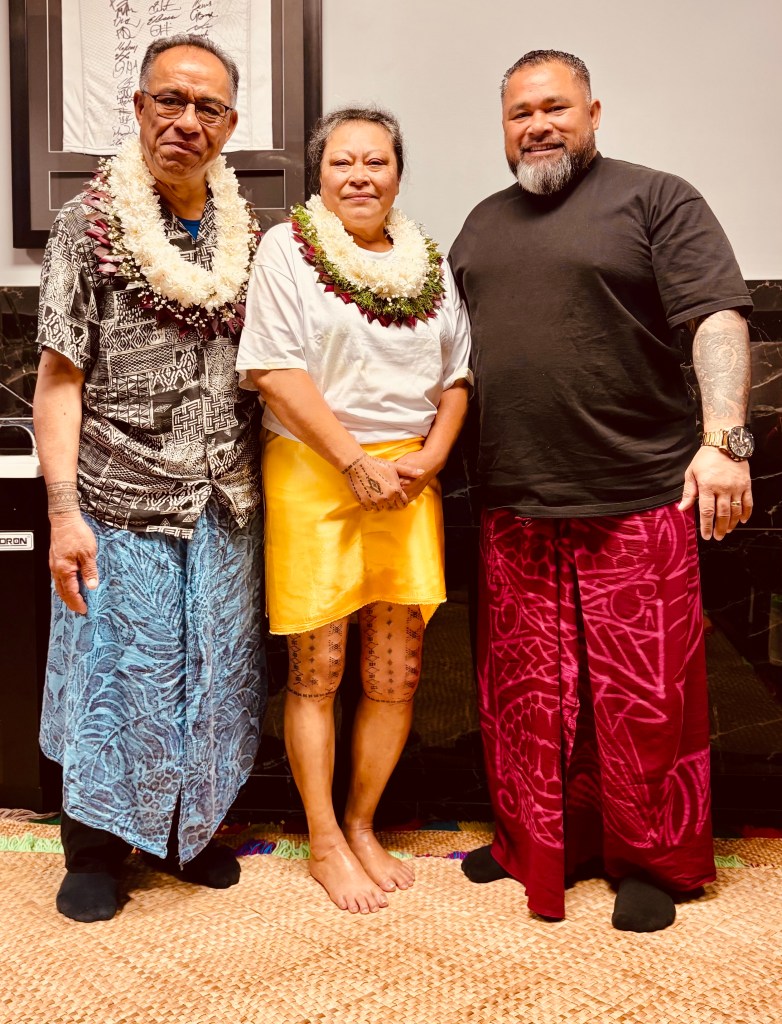
My name is Su’a Taefu Ausanetaliitama Falefitu – I go by Fitu Taefu for short!
As the eldest and only son of a Samoan Matriarch and a High Chief, I have always had a profound sense of duty to preserve our cultural legacy and family customs. Both my parents trace their origins to opposite ends of the expansive district village of Falelatai in Samoa.
My name, Falefitu, means “The House of Seven,” representing the seven esteemed chiefly titles within my family and the broader Falelatai community. I am now honored to hold the title of Matai (Chief).
My lineage is directly connected to Tatau (the traditional Samoan tattooing practices). My Dad’s genealogy is one in the same with the Origin Story of Tatau and my Mum’s, the renowned Suluape family, were recipients of the Tatau teachings & practices within that same Origin Story (see below).
I was born and raised in Aoteroa (New Zealand), in a Samoan speaking home. Growing up, my Mum would often take me for visits with my Uncle, the late Grandmaster Tufuga (Traditional Tattoo Artist) Su’a Suluape Paulo II, at his home in Otara, South Auckland. The deep connection between my Mum and Uncle was obvious and they engaged in heartfelt conversations about our Aigā (family) back in Samoa often.
During these visits, my Uncle would share stories, teachings and practices of Tatau. He would offer blessings for me, sharing his hopes for my future. I learned from my Uncle the culture and ceremony of Tatau. I am grateful to my family, especially now more than ever, for teaching me the Samoan language, stories and ways of life.
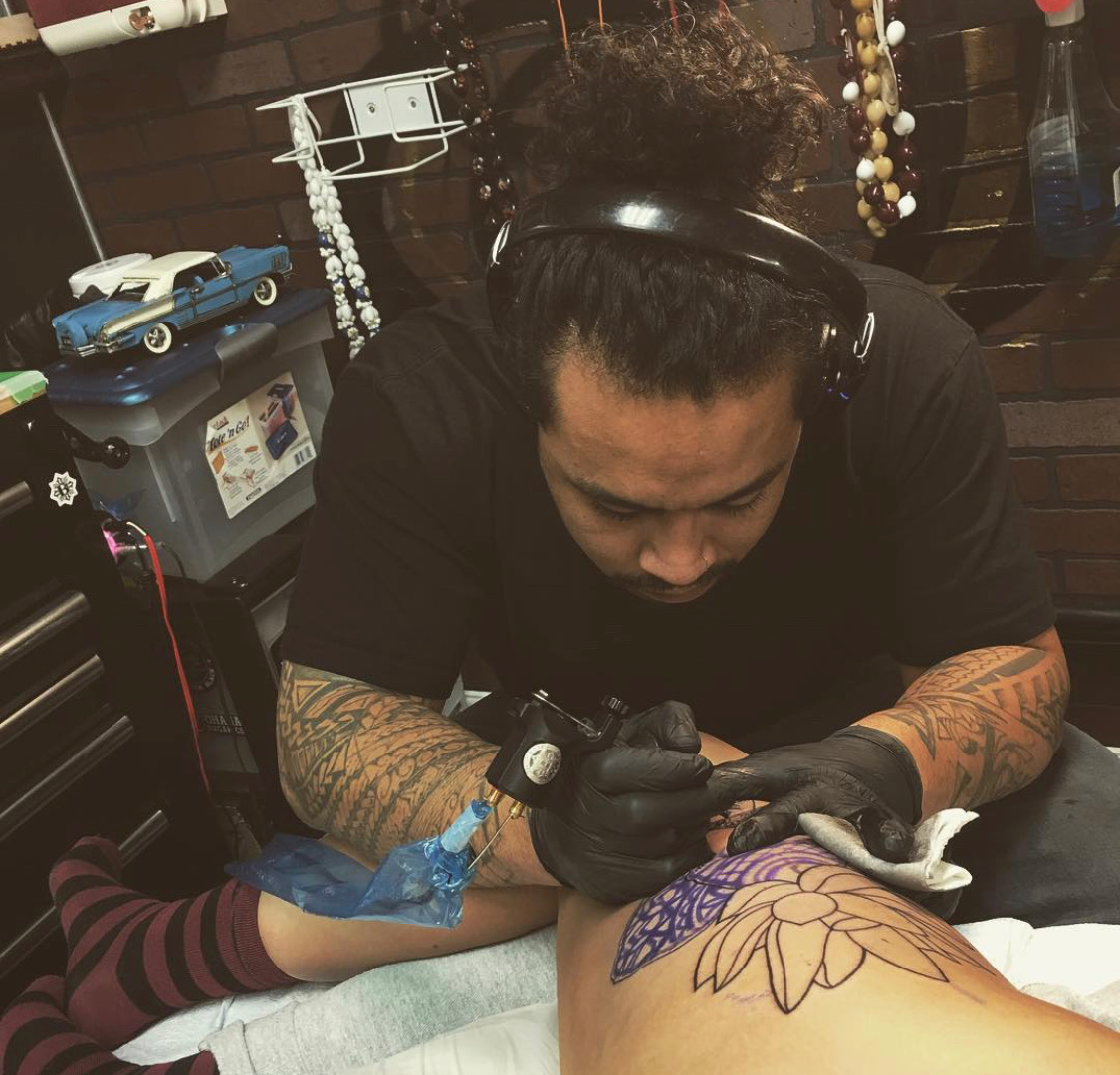
I moved to Canada in 2009 and learned the Western way of tattooing. Since then, I have been tattooing both Traditional Polynesian Hand Tapped and Western Tattoo Machine Tattoos. I am proud to be the only Tufuga in Canada and am always happy to see clients from out of town, out province and even out of country!
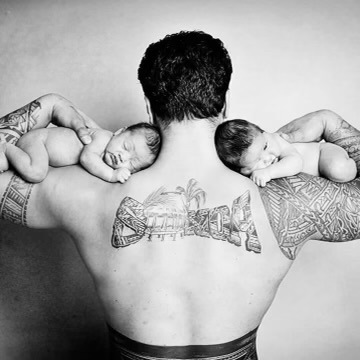
I am a Girl-Dad to 3 amazing kids: Samoan Girls Can Do Anything! Every day I honor my Mum and Dad and their traditional teachings in the work that I do.
The Legend of Tatau
This rendition of the Legend (Origin Story) of Tatau has been shared by my parents and translated from Fa’asamoa (Samoan Language) to English by my sister Anne Taefu.
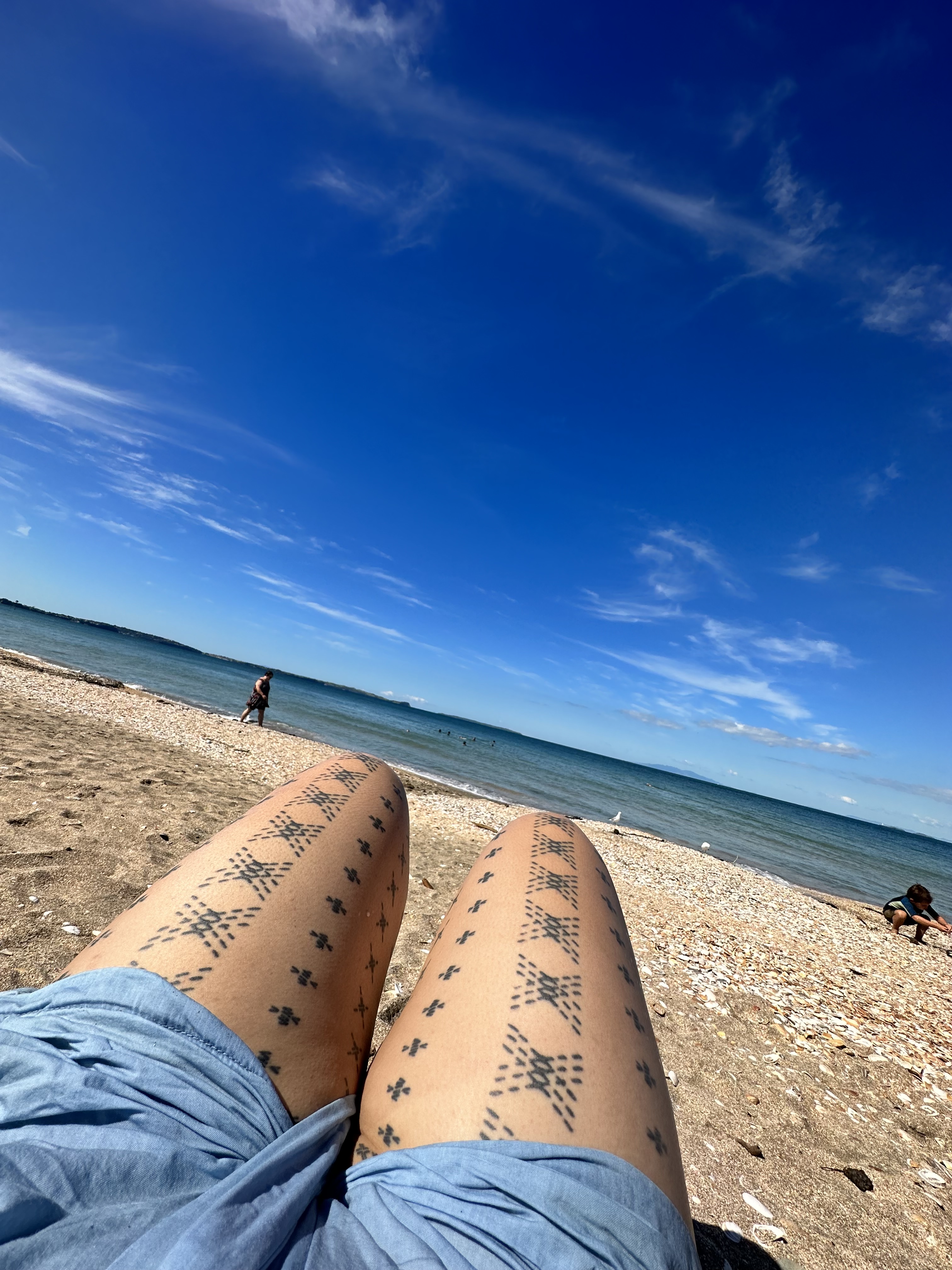
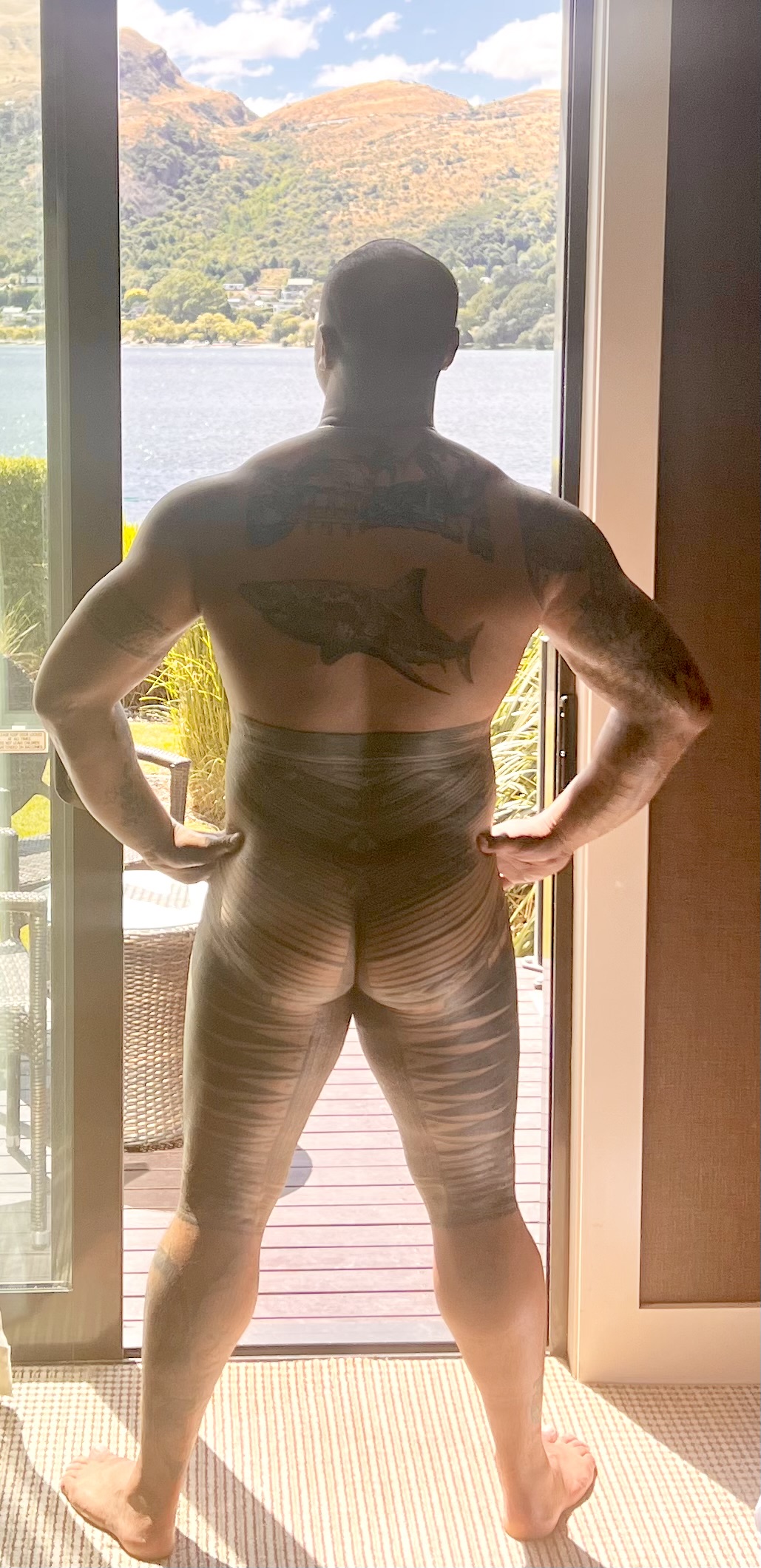
‘Within Samoan culture, there exists a singular, enduring rendition of the Tatau legend, handed down through generations. Alternative variations or historically accurate accounts of this myth remain unverified by academic sources. In Samoan culture, Fa’alupega, or the naming of chiefly titles, plays an integral role in shaping one’s identity, fostering a sense of belonging, and shaping one’s worldview. Knowing one’s fa’alupega (genealogy) signifies a connection to ancestral lands and origins.
Both of my parents hail from opposing sides of the vast district village of Falelatai in Upolu, Samoa. The older generation, revered for their wisdom and insight, acknowledges that many of the remarkable myths and legends depicting demigods and royalty have their roots in Falelatai. The version of the Tatau legend specific to my village is a cherished ancestral story that, for the most part, remains reserved as familial heritage. Nevertheless, I am willing to provide some context regarding my family and village’s connection to the art of Tatau, while preserving the more intricate details by revealing only the general names of paramount titles associated with this version.
My name, Falefitu, translates to “The House of Seven,” signifying the seven highly esteemed paramount titles within my family and the broader Falelatai community. In no particular order, these titles include Taefu, Misa, Sila, Nanai, Anae, Faalavaau, and Tagomoa. In the past, my name was “Falefitu o le Ati a Tagaloa,” but it later evolved to its current form, “Falefitu O le Aiga Tauaana.” Despite these seven titles, there is another significant chief title, not among them, that holds a substantial role in Falelatai’s history. This paramount chief, Fasavalu, had a daughter named Sinalalofutu. She, along with Ulufanusese’e, bore two children, Conjoined Twins known as Taema and Tilafaiga.
Our belief is that these sisters are the exclusive guardians of the Tatau, having retrieved the sacred basket containing the traditional Tatau tapping tools from an ancient place that no longer exists today. This version contradicts the popular legend, which suggests that Tatau originated in Fiji. According to the Falelatai rendition, the sisters obtained it from the ancient location called Fitiuta in Folau.
My father’s Fa’alupega (geneaology) depicts the acquisition of the Tatau, while my mother’s affirms the right to practice it. Moreover, my mother’s father, Sila Ioane I Taito Pale, and the grandmaster Su’a Sulu’ape Paulo II are first cousins, as their grandmothers were sisters, children of Siaana. Certain aspects of this version remain undisclosed, but this brief summary encapsulates my family and village’s connection to this Legend.’
 TATAU LE TOA INC